Ricky & Keshawn’s Proposal for a Course on Racism for Middle School Students (Fall 2023)
Below is a proposal for a curriculum for middle school students that covers several course units. For each unit, information about the topic is provided for the teacher/parent and an example or breakdown is provided for the student.
Unit 1: Implicit Bias
Background reading: Educating All of Our Children: Understanding and Addressing Implicit Bias. Perception Institute.
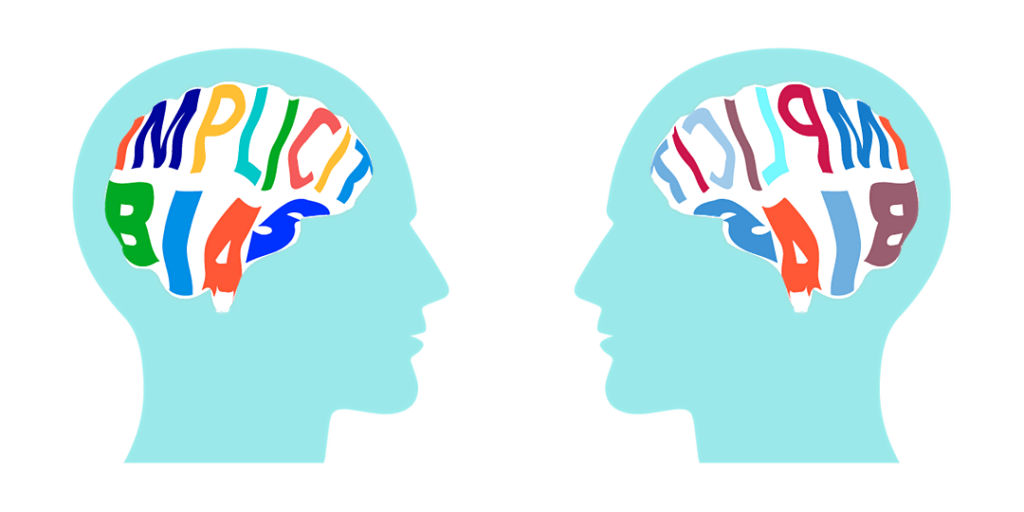
For parents/teachers: Implicit bias is a very complex thing. It is a stereotype that happens unknowingly. It happens automatically and usually unintentionally. Even though it may seem small it affects so much in our world. On a general level it affects decisions, judgements made, and how people behave. People can have implicit bias on a lot of things such as what you think of first when hearing a certain word or what you think of when seeing a certain picture. For example when given the word “teacher” people may tend to picture a female in their brain; that would be an example of an implicit bias. Implicit bias is bad because it is racism and prejudice even if it is unintentional, and in certain situations it can have a catastrophic effect. For example in police departments. Split second decisions can cause a life or death change and police need to be thoroughly trained, on a weekly level, to stop their implicit biases whatever they may be. On a more concentrated level, one can increase and decrease their levels of implicit biases based on how they think and how they act. If one uses internal motivation to lessen prejudices (they truly believe that prejudices are wrong), then they will be more likely to lower their implicit bias. That being said, if someone uses external motivations to stop their prejudices (such as reasons regarding the law or social reasons regarding not wanting to be canceled), then it is less likely they will lower their implicit biases. External motivation doesn’t reflect how they truly feel and it is more based on how they are forced to comply with norms. From a teaching standpoint, especially middle schoolers, they need to be taught what implicit biases are, that everyone has them, and how to deal with them in a productive manner – like being internally motivated. If we educate our youth on a topic and give them a solution in terms that they can understand then we can begin to see change in a way that we want and need. In a classroom, middle schoolers will talk about what implicit biases are and how we can work to lower them using internally motivated skills. The main skill is being informed.
For students: You are in class and a new student comes into your classroom. They are from a foreign country. That is the only fact that the teacher knows about them. They come into class and the teacher assumes they cannot speak/read/write english. The student is able to do all three very effectively. This would be an example of the teacher’s implicit bias. In order to stop this, the teacher needs to be informed not to make judgements on anyone because they do not know anyone’s situation.
Unit 2: Aversive Racism
Background Reading: Aversive Racism. Encyclopedia of Race and Racism.
For parents/teachers: Aversive racism is a specific theory about implicit bias. It characterizes the racial attitudes of many Whites who endorse egalitarian values and regard themselves as non prejudiced, but who nonetheless discriminate in subtle ways they can rationalize (to themselves and others) as being about some quality other than race.
For students: Imagine you have a buddy who constantly states that they believe in treating everyone fairly and being friends with anyone regardless of who they are or what they look like. Keep in mind that they may truly mean it and believe they are not being unfair to anyone. However, they may act in ways that aren’t always fair without even realizing it. Aversive racism is when someone does not intend to be racist and sincerely believes in treating everyone fairly, yet they wind up doing unfair things without even recognizing it. Some people may not even realize they are being unjust because it occurs in an unnoticed manner. This “unnoticed manner” is known as “implicit bias,” which means having thoughts you don’t realize you have. So, it’s important for all of us, no matter our background, to pay attention to how we treat others and make sure we’re being fair to everyone, just like we want to be treated.
Unit 3: Microaggressions
Background Reading: What To Know About Microaggressions. Health Matters.
For parents/teachers: Microaggressions are unintentional, subtle, verbal, nonverbal, or environmental acts of bias by others, as well as discrimination and prejudice. These behaviors send harmful discriminatory messages about a person’s race, gender, ethnicity, or other social identity. Microaggressions can be unpleasant and painful, even if the individual giving them is unaware of the consequences.

For students: Microaggressions are minor discriminating remarks or actions made by individuals. These behaviors can be words, gestures, or actions that occur and demonstrate bias or unfairness to someone from a different social background. Imagine you’re playing a game and someone says something that makes you feel bad about yourself because of who you are, such as your color, gender, or where you’re from. This is a classic case of microaggression. It is critical to understand that these activities can be harmful, even if the perpetrator did not intend to do so. It’s like when someone accidentally dirties your shoes; they didn’t mean to, but they did, and now you have to clean off the dirt. You should be aware that microaggressions are small, as the name implies, but sometimes these thoughtless microscopic actions can make individuals feel horrible about themselves because of who they are. It is crucial for all of us to be conscious of them and attempt to be more kind to others.
Unit 4: Colorblind Ideology
Background Reading: Unlearning: Kindness, Color Blindness and Racism (2021). PBS Teachers Lounge.
For parents/teachers: Colorblindness is another topic in this class that needs to be taught to students of all ages, but if we can teach middle school students it will benefit our society a lot. Colorblindness is when someone professes to not see or notice racial differences, and this includes not talking about them. In our class reading through the title it is made known that color-blind means color mute. Making race talk mute is the exact opposite of helpful in the goal to stop racism, prejudice, and discrimination. Voices need to be heard, stories need to be told, people need to be educated. Taking away from this would be ignorant. There has been so much racism in this world and to pretend it does not exist would be adding to the problem! In reality colorblindness is a cop-out to owning up to the horrible racism that is going on in our society and the racist structure of it as a whole. Colorblindness is based on three main ideas: (1) denying differences racially (color evasion); (2) the avoidance of acknowledgement of stereotypes and pretending they do not exist; and (3) avoiding the acknowledgement of the structural or institutional racism and the power structure in our society. By avoiding these three things not only are we not learning to be anti-racist, we are adding to the racism and letting it perpetuate.
For students: Middle school students need to be taught what colorblind ideology is, and why it is a bad strategy when going about race. They need to be taught that avoiding topics, instead of bringing attention to them, is a bad thing if you want change. They need to be taught that there is racism, that the system is racist, and that people in general are racist. Once they know this, then we can enlighten them that change can be made if we point out all that is wrong in our society instead of running from it. In a classroom, the unit should talk about why we need to acknowledge race and the potential outcomes of not doing so.